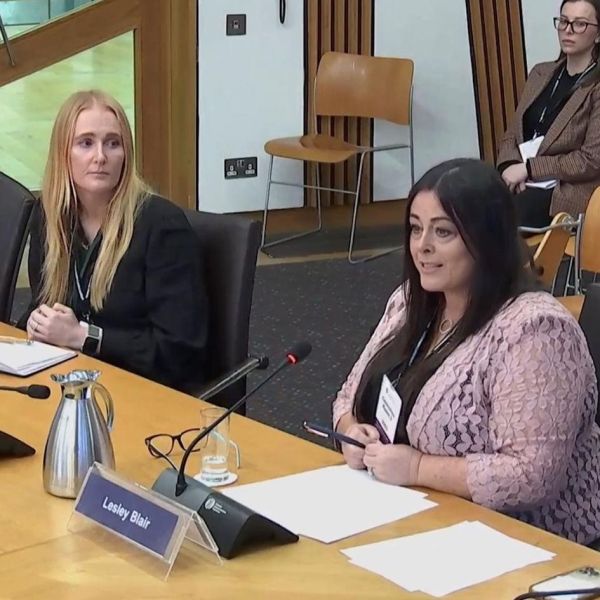
An Evidence Session held on Tuesday the 2nd December by the Health, Social Care and Sport Committee at The Scottish Parliament was attended by Lesley Blair MBE, CEO and Chair of BABTAC (British Association of Beauty Therapy and Cosmetology) and Victoria Brownlie MBE, Chief Policy and Sustainability Officer, British Beauty Council.
Both highlighted concern that the proposed Scottish Non-surgical Procedures and Functions of Medical Reviewers (Scotland) Bill varies substantially to the Scottish Government’s Consultation Response, as laid out in June 2025.
Below is a summary of the main points presented by Lesley Blair MBE and Victoria Brownlie as well as full comment from both.
Lesley Blair MBE has campaigned extensively for regulation across the UK aesthetics industry and regularly consults with both the UK and Scottish Governments on the issue.
To summarise on the main points presented by Lesley Blair MBE, CEO and Chair of BABTAC, and Victoria Brownlie, Chief Policy and Sustainability Officer, British Beauty Council
- The bill is a useful starting point but needs much more detail and structure to keep pace with an evolving industry and restore proper oversight.
- A clear regulatory framework is essential for both healthcare and non-healthcare practitioners, providing consumer education, practitioner accountability and parity across the sector.
- Non-healthcare practitioners currently have no formal recourse or accountability if something goes wrong, and introducing this would raise standards and protect the public.
- Regulated, standardised qualifications and a risk-based hierarchy of procedures are vital to create national benchmarks, raise industry standards and eliminate unsafe practices in what has become an unregulated Wild West while still protecting professional fit for purpose beauty businesses (as determined by the groupings originally agreed upon in the Bill)
- Scotland’s current Bill is too broad and lacks detail, particularly around training, education, oversight, and clarity on which healthcare professionals are qualified to supervise treatments.
- While many practitioners are highly competent, non-healthcare individuals are not legally able to access and administer the prescription medication needed to safely manage complications from injectables.
Lesley Blair MBE comments: “While we welcome the bill as an important starting point, it urgently needs more substance. The aesthetics industry is evolving at an extraordinary pace, and in recent years things have drifted off course. We need a framework that applies to both healthcare and non-healthcare practitioners and is based on regulation that is proportionate and appropriate to the level of risk of each treatment. Clear licensing, consumer education and defined boundaries would help ensure that practitioners work within their qualifications and capabilities, and that the public understands where to go and what standards to expect.
There are plenty of excellent advanced aesthetic non healthcare practitioners in the beauty sector who are highly qualified and skilled in the modalities they safely perform. As the sector is not regulated though, there is no formal recourse if something goes wrong, allowing unscrupulous and underqualified individuals to operate without appropriate safeguards. Introducing proportional accountability for non-healthcare practitioners would meaningfully raise standards and most professional, well-trained practitioners will welcome it wholeheartedly. This must however sit alongside a fair and risk appropriate hierarchy of procedures and properly regulated qualifications that provide consistent nationwide benchmarks. Regulated qualifications ensure quality, follow national occupational standards and guarantee that practitioners meet the required competencies.
We were pleased to be invited to provide further evidence on the proposed Scottish Non-surgical Procedures bill. As drafted, the bill places all aesthetic treatments, from superficial peels to injectables, into a single category. This contrasts with the risk-based system used in England, where treatments are categorised using a red, amber and green model. We firmly believe that injectables should only be administered by suitably qualified medical practitioners. At the same time, we support a framework that enables beauty therapists to perform advanced aesthetic treatments such as microneedling and chemical peels, provided they hold fit-for-purpose qualifications and adequate insurance. We welcome the opportunity to contribute to this discussion and advocate for a balanced, evidence-based approach that protects public safety while supporting responsible professional progression within the aesthetics sector.”
Victoria Brownlie MBE comments: "over recent years, we’ve worked closely with the UK Government on its efforts to strengthen regulation in the aesthetics sector, which is essential for raising standards and improving professionalism across the industry. As treatments have become more accessible, they’ve also taken on a more frivolous perception compared with a decade ago. That’s why strong regulation in Scotland is vital, to reinforce that these treatments [injectables] are procedures with real risks, requiring mandatory regulatory processes to ensure practitioner competency, safe premises, and clear avenues for recourse if something goes wrong.
While the Bill is a positive step, we need greater detail around training, education, and oversight, as well as clearer definitions of which healthcare professionals are properly qualified to supervise treatments. In the UK, this is limited to individuals regulated by bodies including the NMC, GMC, GPC and GDC; the current Scottish approach also includes bodies that regulate Osteopaths, Chiropractors and Optometrists, this is far too broad and we would question their suitability to oversee the types of non-surgical procedures outlined in the Bill.”
We recognise that many competent practitioners exist, but this is not consistent across the sector. When complications occur, effective management requires clinical training, significantcomplications management knowledge, and timely access to prescription medications. For these reasons, the Council maintains that non-healthcare practitioners cannot safely operate in this space.”